‘The least of these’
Upper Valley communities and the growing homelessness challenge
By Merrick Parnell
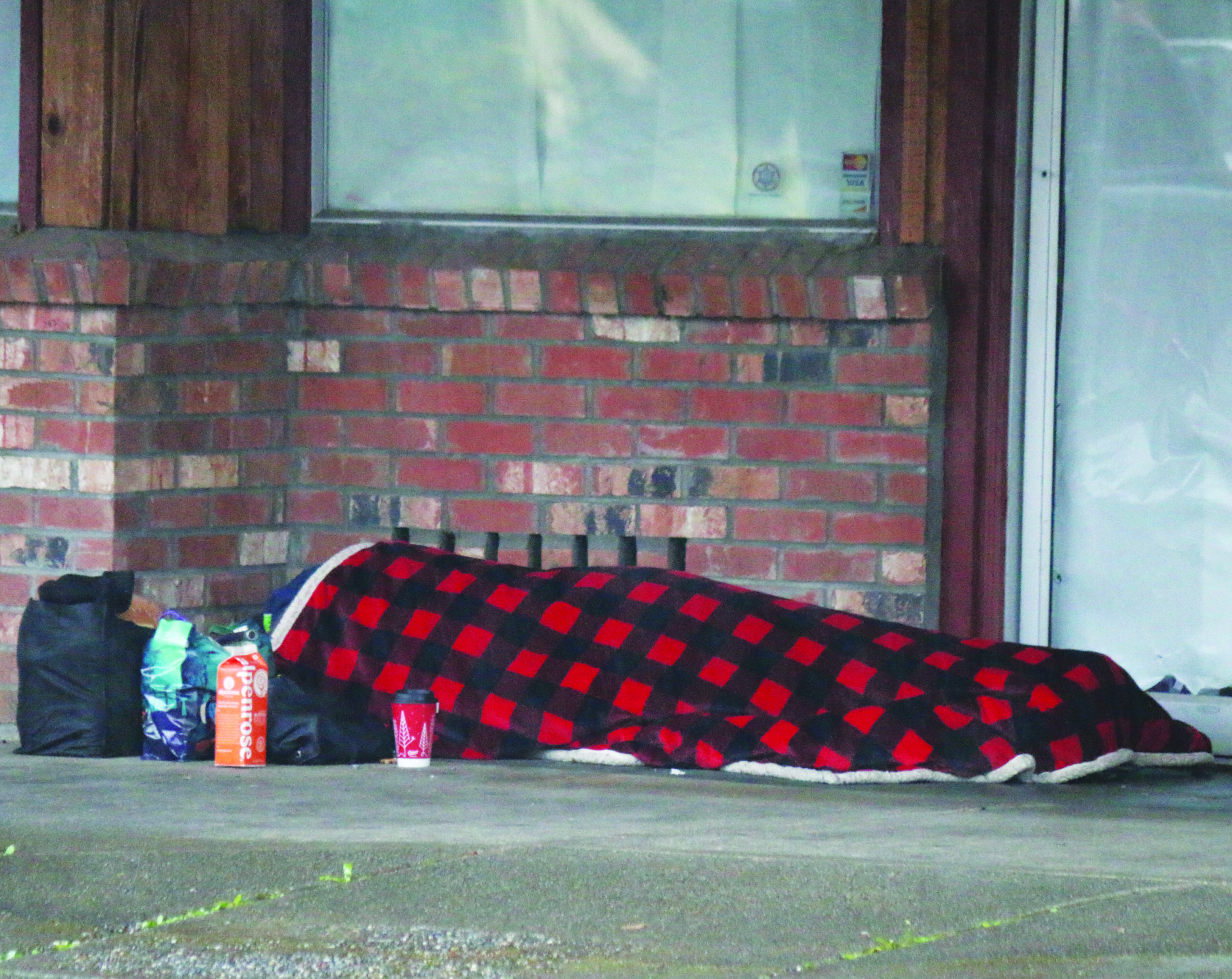
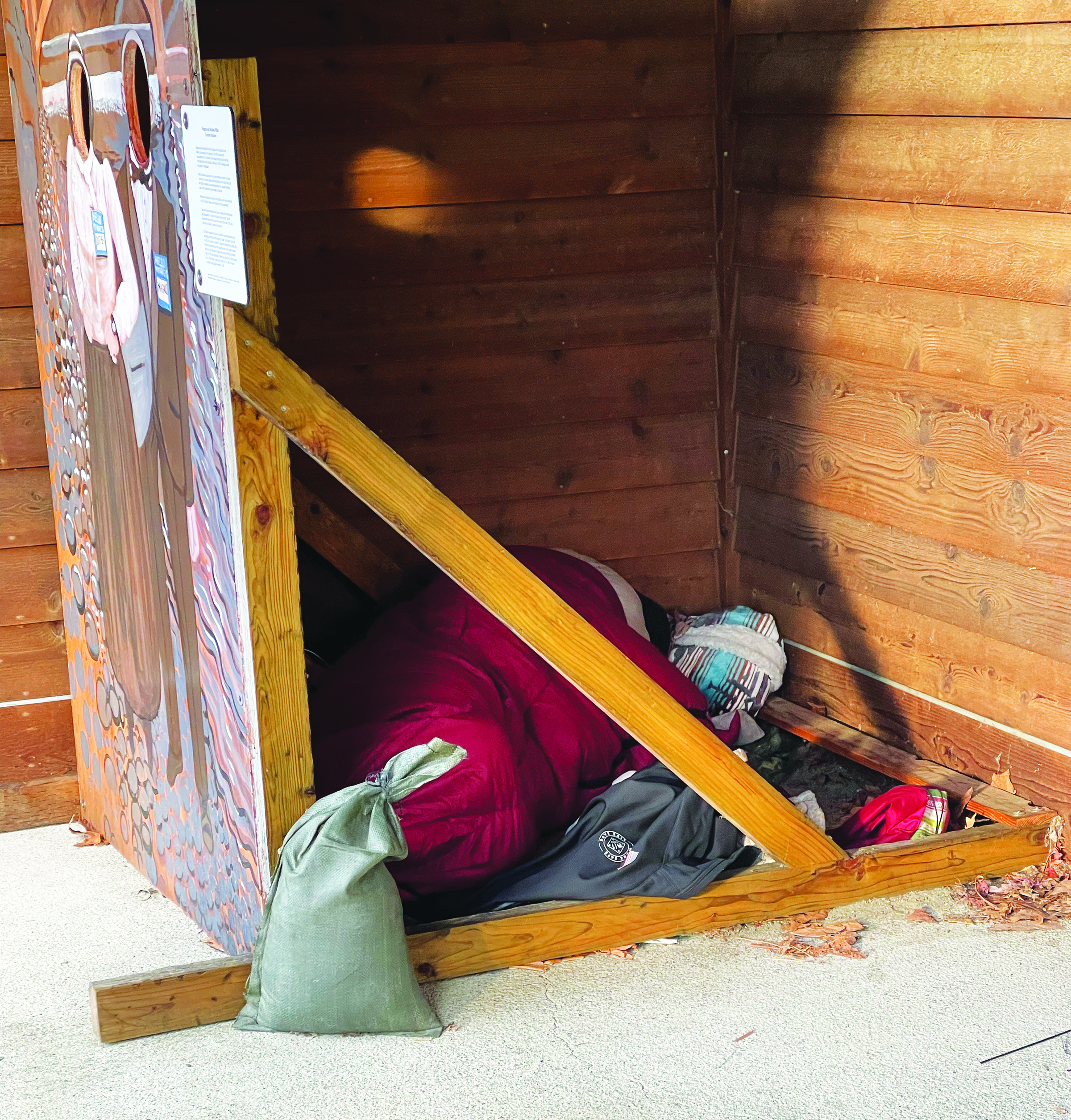
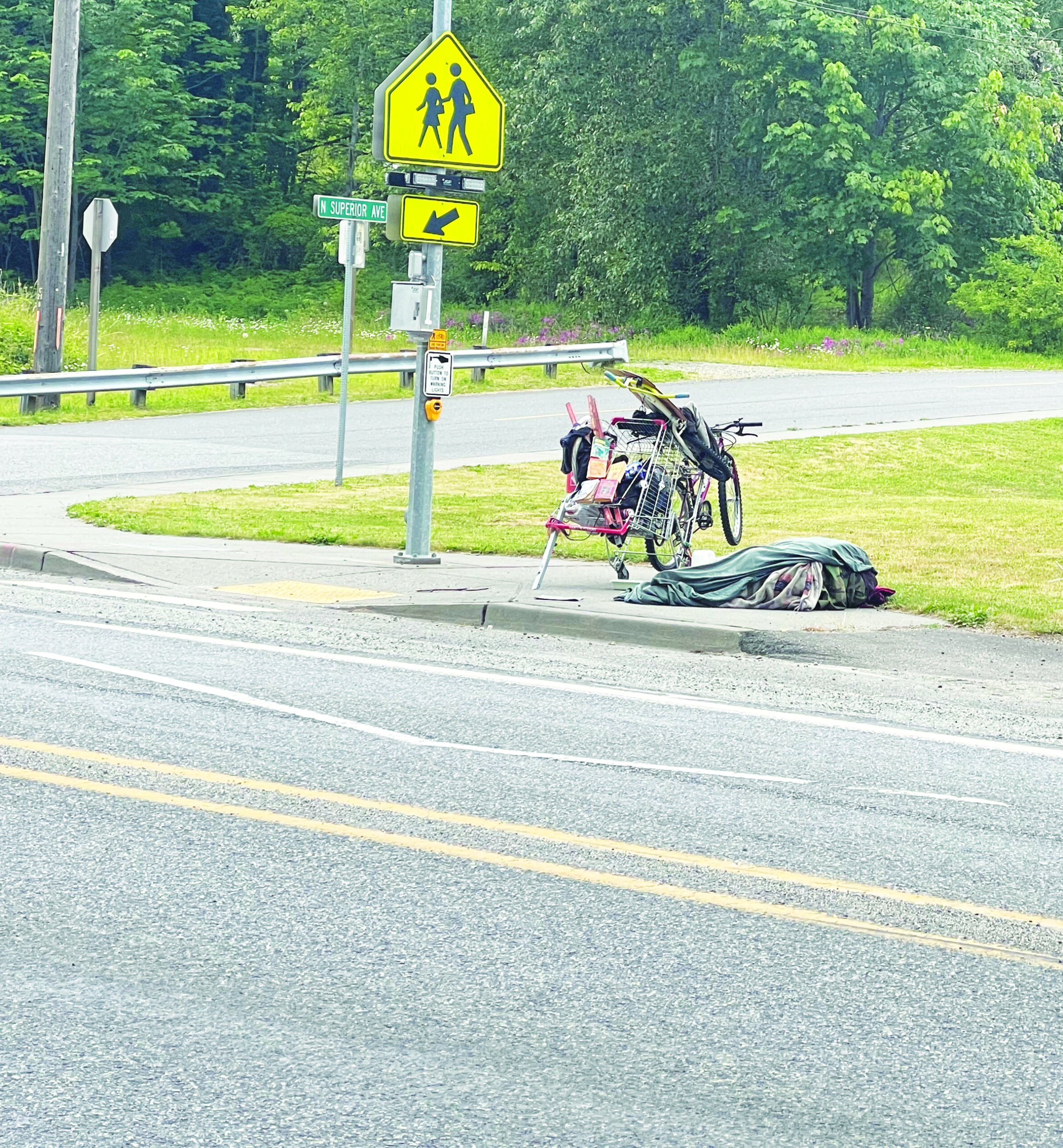
Communities throughout the Upper Skagit Valley are confronting a growing challenge as unhoused individuals become more visible in places such as Sedro-Woolley, Concrete, and Darrington.
What was once viewed by some as primarily a larger-city issue has increasingly become a local concern, raising questions about housing availability, public resources, community safety, and how best to support people experiencing homelessness.
The issue is complex, with many factors contributing to housing instability, including rising housing costs, limited services, mental health challenges, substance use disorders, and personal hardships. As residents and leaders look for solutions, agencies, law enforcement, churches, and community organizations across the region are working to understand the issue while balancing community concerns with compassion.
According to the National Alliance to End Homelessness, homelessness is often driven by systemic issues such as poverty, a shortage of affordable housing, and economic instability, rather than a single personal failure. Homelessness frequently develops through a combination of circumstances, including financial hardship, job loss, and a lack of support systems.
Many other circumstances also can contribute to housing instability. MedlinePlus, a resource of the U.S. National Library of Medicine, identifies poverty, unemployment, lack of affordable housing, mental health conditions, substance use disorders, trauma, domestic violence, disabilities, illness, and loss of family support as factors that can increase the risk of homelessness.
The Centers for Disease Control and Prevention notes that homelessness can take many forms, including people living outdoors, staying in shelters, or temporarily relying on friends and family. Rising housing costs, stagnant wages, barriers to health care, and limited access to social services can contribute to housing instability too.
The Substance Abuse and Mental Health Services Administration highlights the connection between homelessness and behavioral health. Untreated mental health conditions and substance use disorders can create barriers to employment, stability, and maintaining housing, while access to treatment and support services can help individuals regain stability.
Local impacts
The impacts of homelessness are often felt not only by those experiencing housing instability, but also by the communities where people seek shelter and support.
Not every Upper Valley community has experienced the same level of concern. In Lyman, a small town 15 minutes west of Concrete, Mayor Eddie Hills said homelessness has not been a significant issue for the community.
“We don’t have any homeless. Nothing to address,” Hills said. “Once in a while we might have someone passing through, but that’s about it.”
In nearby Concrete, however, former Public Works Director Terry Coggins said he witnessed the challenges created when people lacked access to housing, sanitation, and basic services.
During his seven-year tenure with Town of Concrete, Coggins said Public Works crews encountered people passing through the community, as well as some individuals with long-standing connections to the area.
“While I worked for the town, we saw numerous transient people come through town and some who grew up around here as well,” Coggins said.
Without stable housing or access to basic services, some people create temporary living arrangements wherever they can find space.
“When transient people have nowhere to go, they find places to make their own. When they do, they don’t have services such as garbage pickup, or proper facilities like a bathroom, so it becomes a huge mess that Public Works had to clean up,” Coggins said.
Cleanup efforts became a recurring responsibility for town crews.
“I can’t remember the number of truck loads of garbage and miscellaneous items we hauled to the dump,” he said.
Coggins’ experience reflects a challenge facing many rural communities: addressing the immediate impacts of homelessness while also working toward long-term solutions.
A regional challenge
The issue extends beyond the Upper Valley and into neighboring communities in Snohomish County. As people move throughout the region in search of shelter, resources, and support, agencies are responding to concerns involving unauthorized camps, transient activity, and individuals experiencing homelessness.
In Skagit County, the Sheriff’s Office said responses to these situations involve both law enforcement and efforts to connect individuals with available resources.
Sergeant Paul Wolfe, who leads the East County Precinct, said deputies respond to reports of transient activity or unauthorized encampments on private property by first investigating the circumstances and determining whether individuals are trespassing.
“The Sheriff’s Office, in general, would respond to any report of transient activity or unauthorized encampment via private property to investigate further,” Wolfe said. “First, the deputy would try to determine if the person(s) is trespassing on private property.”
Wolfe said determining whether a person is trespassing helps deputies identify what legal options are available.
“This would help determine any legal basis of removal,” Wolfe said. “At times, deputies will issue a citation for criminal trespass, and other times move them along and issue a trespass warning, documenting the incident.”
Following contact with individuals, deputies also evaluate whether additional support services may be appropriate.
“After contacting the subject(s), the deputy would then evaluate the need for any resources available through partners in the community or by putting them into contact with one of our embedded mental health professionals (MHPs),” Wolfe said.
The Sheriff’s Office works with Skagit County Public Health through the Crisis Response Team, which includes embedded mental health professionals. Wolfe clarified that these professionals are county employees who work alongside law enforcement, rather than contracted providers.
Deputies may involve a mental health professional during calls involving concerns related to mental health, substance use, suicidal thoughts, unusual or concerning behavior, difficulty accessing services, or situations where behavioral health expertise may help.
“Experiencing homelessness alone is not a reason for an MHP response,” Wolfe said. “Rather, deputies consider the individual’s needs, the circumstances of the call, immediate safety concerns, and whether a behavioral health assessment, crisis intervention, or connection to community resources would be beneficial.”
Wolfe said deputies remain responsible for addressing safety concerns and law enforcement-related issues, but once a scene is safe, they may connect individuals with mental health professionals who can provide additional support.
“Once the scene is determined to be safe, they may introduce the MHP and facilitate a warm handoff so the individual can speak with someone who has specialized behavioral health training,” Wolfe said.
The partnership between deputies and mental health professionals allows each group to focus on their area of expertise. Deputies address public safety, legal considerations, and immediate concerns, while mental health professionals provide behavioral health assessments, crisis intervention, and connections to services.
“Deputies and MHPs bring different but complementary areas of expertise to these calls,” Wolfe said. “Deputies focus on scene safety, legal considerations, and immediate public safety concerns. The MHP provides behavioral health assessment, crisis intervention, de-escalation, and support in identifying the individual’s needs.”
After an initial response, mental health professionals can help connect individuals with services such as crisis programs, shelters, treatment programs, medical care, substance-use services, transportation, and other community resources.
Wolfe said the work often continues after the initial call through follow-up outreach and coordination with service providers.
“The goal is not simply to resolve the immediate call, but to identify practical, longer-term support that may reduce future crises and improve the individual’s connection to care,” Wolfe said.
In Snohomish County, the Sheriff’s Office also has dedicated resources for outreach and connecting unhoused residents and people experiencing behavioral health challenges with services.
Courtney O’Keefe, director of communications for the Snohomish County Sheriff’s Office, said the agency has dedicated resources focused on connecting available services to unhoused residents and people experiencing behavioral health challenges.
“The Sheriff’s Office has a unit dedicated to serving our unhoused population and those struggling with mental health and behavioral health issues,” O’Keefe said. “Our deputies assigned to the Office of Neighborhoods partner with Snohomish County Human Services social workers (they ride in the car together) to have immediate access to address these issues and provide services and resources.”
The SCSO Office of Neighborhoods program focuses on improving community safety through outreach while connecting with the county’s unsheltered population to address long-term issues related to homelessness, behavioral health, and substance use.
O’Keefe said the department works with Snohomish County Human Services through the SCOUT program, which provides access to social workers and mental health professionals.
“We partner with Snohomish County Human Services SCOUT program to provide access to social workers and mental health professionals,” O’Keefe said. “There is also a designated crisis responder program through Human Services.”
O’Keefe said the agency works to balance public safety responsibilities with efforts to connect vulnerable individuals with resources.
“We respond to these calls with a multi-pronged approach grounded in compassion, support, and public safety,” O’Keefe said. “We serve many vulnerable populations throughout Snohomish County, and our first priority is to connect people in need with available services and encourage them to accept assistance.”
Building a sense of belonging
In Concrete, Mount Baker Presbyterian Church is taking a community-based approach focused on relationships, dignity, and connection. Pastor Kevin Riley has referred to the church as a “Matthew 25 congregation”; that is, one that is attentive to “the least of these”—strangers who are hungry, thirsty, sick, naked, and imprisoned—which Jesus referenced in verses 31 to 46 of that chapter.
Riley said the church does not view its work as simply a homeless ministry, but as an effort to create a stronger sense of belonging.
“At Mount Baker Presbyterian Church, we don’t see this as a homeless ministry; we see it as a ministry of community,” Riley said. “Every person deserves dignity, relationship, and a place where they know they belong.”
Riley said the church recognized that many people facing housing instability, addiction, poverty, and mental health challenges were often moving between agencies without finding lasting support.
“We believed the church was uniquely positioned to become a bridge rather than another doorway people had to navigate,” Riley said.
That belief led to the creation of the Community Belonging Center, a collaborative space where partner organizations connect people with behavioral health services, recovery support, case management, hygiene services, and housing assistance.
“Our role is to bring those partners together under one roof where people can access services in a welcoming environment built on dignity instead of judgment,” Riley said.
Riley said homelessness is often misunderstood.
“The reality is almost always far more complicated,” Riley said.
He said people experiencing homeless-ness come from many backgrounds, and events such as a medical emergency, job loss, family breakdown, or untreated trauma can create circumstances that are difficult to overcome.
“Housing is essential, but housing alone rarely solves everything,” Riley said. “People also need community, purpose, healthcare, recovery support, employment opportunities, and people who will continue walking alongside them.”
Finding solutions
As Upper Valley communities continue their response to homelessness, leaders and service providers agree there is no single solution. Addressing the issue requires affordable housing, behavioral health resources, community partnerships, and support systems.
For those working directly with people experiencing homelessness, the goal is not only to provide immediate assistance, but also to help individuals reconnect with stability, dignity, and community.
“Homelessness is not someone else’s problem,” Riley said. “It’s a community issue, and community issues require community solutions.”
Riley said changing the conversation begins with understanding the person behind the circumstance.
“When we stop asking, ‘What’s wrong with this person?’ and start asking, ‘What happened to this person, and how can our community help?’ everything changes,” Riley said.
“The opposite of homelessness isn’t simply housing. It’s belonging.”